Dublin charity says Government drugs policy not prepared for arrival of deadly synthetic opiate…
Kitty Holland… Oct 20 2022
Fentanyl could be the next wave of the drugs crisis and Government drugs policy is ill-prepared for it, an expert on drug treatment has warned. Passerose Mantoy, chief executive of the Chrysalis community drug project in Dublin’s north inner city, said strategies to combat drug abuse and to support people in addiction needed to be “more proactive and less reactive”. “The drug industry moves fast and they are ingenious in promoting and getting their product to market, so we need to get ahead. What will be the next drug hitting the Irish market? Will we be prepared?” She said several years ago no one believed crack cocaine would be widely used here. “Now I would say all our service users are using crack.
“Illicit fentanyl is causing havoc on the streets of America, with 100,000 deaths because of it in 2021.” Fentanyl is a synthetic opiate, used to treat pain when prescribed but increasingly being manufactured illicitly in the United States where it is behind an escalating number of drug overdose fatalities. Ms Mantoy was speaking at the publication of Chrysalis’s strategic plan 2023-2025. The charity has provided supports and services to drug users and their families in the Dublin 7 area since 1998 and more recently in Dublin 1.
She said all drugs services were “trying our best to address the drug crisis and support individuals in addiction but we need a more concerted effort from the State to fund and support addiction and mental health services. “Since Covid we have seen many experienced workers leaving the field or experiencing burnout. To respond adequately we need to retain our staff by supporting them, acknowledging and valuing their work and remunerating them appropriately.” Also on Thursday, Merchants Quay Ireland (MQI) reported an almost one fifth increase in demand for its services last year. Its 2021 annual review showed an increase of more than a quarter (27 per cent) in demand for its harm-reduction services — to 49,448. “In 2021, despite the continuing impact of Covid-19, MQI saw an overall increase of 17 per cent in clients across the organisation. This was a total of 11,621 unique individuals,” said its chief executive Paula Byrne.
“Last year 4,095 of our clients were registered as homeless [and] specifically, in Q4 of 2021, the number of clients presenting as newly homeless increased by 55 per cent compared to [the same period] the previous year. This increase is due to the lifting of eviction bans, the reality of Covid-19 job losses, and increasing rent prices in 2021.” She said the majority of those who engaged with the charity’s mental health team last year had a dual diagnosis of both mental health and substance use issues.
“Without access to specialist services, clients with a dual diagnosis often struggle to have their serious health and social care needs met. “We welcome the allocation of resources and funding to the clinical care programme for dual diagnosis, and hope this programme will lead to greater collaboration and inter-agency responses,” said Ms Byrne.
Kitty Holland…
Kitty Holland is Social Affairs Correspondent of The Irish Times
Report From Washington…
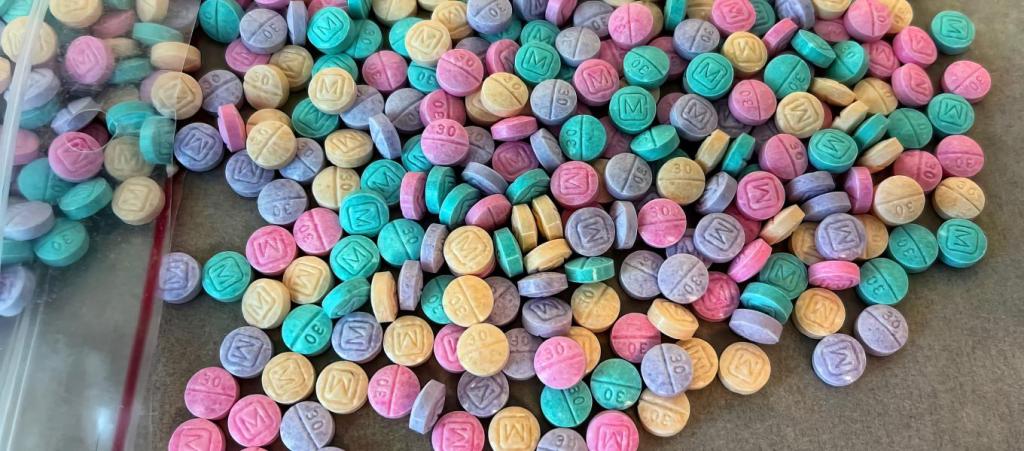
Rainbow Fentanyl pills that come in a wide variety of bright colours, shapes and sizes
WASHINGTON – The Drug Enforcement Administration is advising the public of an alarming emerging trend of colorful fentanyl available across the United States. Since August 2022, DEA and our law enforcement partners seized brightly-colored fentanyl and fentanyl pills in 26 states. Dubbed “rainbow fentanyl” in the media, this trend appears to be a new method used by drug cartels to sell highly addictive and potentially deadly fentanyl made to look like candy to children and young people.
“Rainbow fentanyl—fentanyl pills and powder that come in a variety of bright colors, shapes, and sizes—is a deliberate effort by drug traffickers to drive addiction amongst kids and young adults,” said DEA Administrator Anne Milgram. “The men and women of the DEA are relentlessly working to stop the trafficking of rainbow fentanyl and defeat the Mexican drug cartels that are responsible for the vast majority of the fentanyl that is being trafficked in the United States.” Brightly-colored fentanyl is being seized in multiple forms, including pills, powder, and blocks that resembles sidewalk chalk. Despite claims that certain colors may be more potent than others, there is no indication through DEA’s laboratory testing that this is the case. Every color, shape, and size of fentanyl should be considered extremely dangerous.
Fentanyl is a synthetic opioid that is 50 times more potent than heroin and 100 times more potent than morphine. Just two milligrams of fentanyl, which is equal to 10-15 grains of table salt, is considered a lethal dose. Without laboratory testing, there is no way to know how much fentanyl is concentrated in a pill or powder. Fentanyl remains the deadliest drug threat facing this country. According to the CDC, 107,622 Americans died of drug overdoses in 2021, with 66 percent of those deaths related to synthetic opioids like fentanyl. Drug poisonings are the leading killer of Americans between the ages of 18 and 45. Fentanyl available in the United States is primarily supplied by two criminal drug networks, the Sinaloa Cartel and the Jalisco New Generation Cartel (CJNG).
In September 2021, DEA launched the One Pill Can Kill Public Awareness Campaign to educate Americans about the dangers of fake pills. Additional resources for parents and the community can be found on DEA’s Fentanyl Awareness page.
 Rialto Community Drug Team