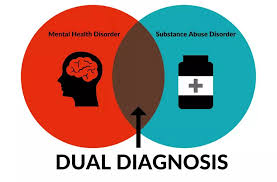
Dual Diagnosis’ is the term used when a person suffers from both a substance abuse problem and another mental health issue such as depression or an anxiety disorder. We believe that if you don’t treat both together you can’t beat either.
Most mental health services and addiction treatment centres in Ireland are currently not organised to treat such people holistically. For example, if you have difficulties abstaining from alcohol due to anxiety, you can not enter rehabilitation services (most residential drug services insist you must be “dry” before entry). Yet you can not get your anxiety problem treated until your addiction to alcohol has been addressed.
Research conducted by independent researchers on behalf of Mental Health Reform which was launched in May 2022 has found that individuals with a dual diagnosis face significant barriers to accessing appropriate care and gaining recovery. The study, entitled Dual Recovery: A qualitative exploration of the views of stakeholders working in mental health, substance use, and homelessness in Ireland on the barriers to recovery for individuals with a Dual Diagnosis, finds that services in Ireland are ill-equipped to provide treatment to people experiencing both mental health difficulties and drug or alcohol problems. (Dual Diagnosis Ireland)
Commenting on the research, Fiona Coyle, CEO, Mental Health Reform said:
“There is a growing acknowledgement that there is a need for integrated treatment for individuals with a dual diagnosis. Historically, Irish policy on substance and alcohol use disorders and on mental health has left the care of these individuals in a vacuum – unable to access services either for mental health difficulties or for addiction. Individuals with a dual diagnosis have found themselves largely rejected by services as a result of their combined mental health difficulty and substance or alcohol use disorder. This, often combined with homelessness has left them at the extreme end of social exclusion, and experiencing severe stigmatisation.”
The study makes four recommendations on how to improve outcomes for people with a dual diagnosis:
- Urgently implement a fit-for-purpose Model of Care for people with dual diagnosis
This Model of Care process must be informed by the expertise of people with lived experience of dual diagnosis, from implementation to continuous monitoring and evaluation. - Develop and run an awareness raising campaign on dual diagnosis and dual recovery.
This should include mandatory practical training for GPs, social care and A&E medical staff in mental health and addiction services. - Provide ring-fenced funding to support dual diagnosis treatments in existing services.
A new, improved Model of Care will require adequate funding to ensure that individuals with a dual diagnosis can access the treatment that they need in the existing mental health and/ or addiction services. Funding should be ring-fenced in the health budget specifically for the treatment of individuals with a dual diagnosis. - Improve access to housing and social inclusion
People with dual diagnosis must be considered in housing and social inclusion strategies.
 Rialto Community Drug Team